

SECTION 5: The Collapse of Ground
In a secularizing world post-scientific revolution, modern philosophers turned to language itself as the site where questions of truth, power, and social life must be worked out. Rather than a divine medium pointing upward toward transcendent order, language became a human practice embedded in institutions, rituals, and everyday interaction. The challenge was to understand how meaning is generated, stabilized, and recognized between speakers who do not have access to metaphysical guarantees. The first decisive turn comes from Ludwig Wittgenstein. In the Tractatus Logico-Philosophicus (1921), he proposes that “the essential business of language is to assert or deny facts” (Introduction, x). Sentences picture the world; the world and language share a logical form. Names attach to objects, and propositions gain sense through this structure: “if the world had no substance, then whether a proposition had sense would depend on whether another proposition was true” (Tractatus 2.0212). Language, in this early view, stands or falls with its capacity to mirror reality.
Yet Wittgenstein ends with limits: “there are, indeed, things that cannot be put into words… What we cannot speak about we must pass over in silence” (6.522). Ethics, value, and the mystical exceed representational language. After leaving philosophy and returning years later, Wittgenstein rejects the idea of essence beneath language and instead argues that meaning emerges from shared human practices. In Philosophical Investigations, he writes, “The meaning of a word is its use in the language” (§43). A word does not carry its meaning as an internal property; meaning is visible only in its use in a greater collage across cultures and individuals. Wittgenstein ultimately concluded that even “an inner process stands in need of outward criteria” (§580). This does not eliminate mystery so much as relocate it to the spaces where language meets the body, pain, or silence.
Ferdinand de Saussure formalizes a related insight. Meaning exists not in reference to a stable external reality, but through difference within a system: “in language there are only differences” (Course in General Linguistics, 1916). A linguistic sign unites a signifier (sound-image) and signified (concept), but no natural bond secures their relation. He also defined langue as the underlying system or structure of language, and parole, as actual speech acts or utterances in use. Jacques Derrida later exposes the philosophical stakes of this system. Since each sign is defined by what it is not, he argues, meaning perpetually defers itself; “there is no transcendental signified” that could anchor the chain (Of Grammatology, 20). Language never arrives at final ground. It constructs authority as it goes.If Saussure teaches that meaning arises only through difference, and Wittgenstein relocates meaning in use rather than essence, Derrida removes the last illusion of grounding. There is no final term that secures all others waiting beneath language to guarantee truth. Instead, we inherit a system that points outward, endlessly, without bottom.
Richard Rorty synthesizes and radicalizes this modern shift: “The world does not speak. Only we do” (Contingency, Irony, and Solidarity, 6). Where Plato tethered language to eternal Forms, Rorty unfastens language entirely from metaphysical ground. What we call truth is not discovered. It is constructed. He writes: “[T]he suggestion that truth, as well as the world, is out there is a legacy of an age in which the world was seen as the creation of a being who had a language of his own.” (Rorty, p. 5) If such a being existed, how could we know this language, and what if this language was not made up of verbal or written signs and signifiers?
Rorty rejects the Platonic assumption that reality has a language. The world does not divide itself into “sentence-shaped chunks called ‘facts’” (p. 5). Language does that. Sentences are human inventions. So is truth: “Truth cannot be out there… The world is out there but descriptions of the world are not. Only descriptions of the world can be true or false” (Rorty, 5). The descriptions of the world that circulate, hold, and take use impact the world around us. Rorty reframes truth as something made through vocabulary, community, and imagination. He echoes German Romanticism when he writes that truth “is not discovered but made” (p. 1). To name is not to uncover a pre-existing essence, but to propose a lens through which reality can be apprehended. In Rorty’s view, language is not a signifier of truth. It is a signifier of other signifiers. A word means only through other words, which mean only through others. Language becomes a self-supporting architecture that never touches the ground.
If language once pointed upward toward divine coherence, it now moves laterally through contexts, histories, institutions, and bodies. Meaning is made, not discovered. Austin emphasizes that meaning resides in sentences, not isolated dictionary units: “what alone has meaning is a sentence… All the dictionary can do… is to suggest aids to the understanding of sentences in which [a word] occurs” (Philosophical Papers, 1979, p. 56). The records of the word “ineffable” frequently arising in sentences having to do with loss, creation, and time orient where words strain most. Grief interrupts syntax. The mystical resists capture. Language wavers where emotion, trauma, embodiment, and silence begin. Ilit Ferber writes, “Pain is not mute; it disturbs language” (Language Pains, introduction). The dictionary seems now no longer a repository of truth but a record of cultural attempts to hold meaning still.
Against this backdrop, J. L. Austin reorients the study of language toward the study of performance, of speech acts. Austin observed that utterances do not only describe—they do. In How to Do Things with Words and later essays, he demonstrates that many statements are not descriptions but actions: to promise, to apologize, to bless, to declare. A successful performative depends on conditions he calls “felicity,” such as proper context, authority, and procedure. John Searle extended this view. Meaning is shaped by intention, recognition, and shared rules. He wrote that “an adequate study of speech acts is a study of langue” (Searle 1969, p. 2). In other words, Searle highlighted that the study of speech acts explains the structure of language; language functions because communities agree on its force. To promise, accuse, greet, bless, or name is to participate in a system of expectations and responsibilities. A promise or command succeeds because institutions, expectations, and shared understandings hold it in place.


The Philosophical Hope for Ground
The Western philosophical tradition begins with a hope that language might reach beyond contingency. From its earliest formulations, philosophy seeks a way for words to touch what does not change. Plato is often named at the beginning of this history because he gives the first sustained account of how language, truth, and reality might be aligned.
Writing in Classical Athens, Plato situates truth in the realm of Forms, eternal and intelligible realities of which material objects are only imperfect appearances. In The Republic, the Form of the Good “gives truth to the things known and the power of knowing to the knower” (508e–509b). Speech succeeds, in this vision, by orienting itself toward what is stable rather than toward what fluctuates.Language gains authority by turning away from the body, from emotion, from the immediacy of lived experience, and by aspiring instead to a realm untouched by time.
This hope intensifies in Plato’s cosmological dialogue, the Timaeus, where a creator figure, the Demiurge, fashions the cosmos according to intelligible order (28a–29b). Although the Demiurge is not a personal god in a later theological sense, the structure is already present. Reality is meaningful because it is ordered. Language participates in that order by reflecting it. To speak truthfully is to align oneself with an underlying coherence that precedes human speech. The appeal of this vision is clear. It promises that meaning can be secured, that knowledge can rise above decay, and that language might transcend the fragility of human life.
Yet even within Plato’s system, a tension remains. Poetry, performance, and affective speech are treated as dangerous precisely because they move people without passing through rational explanation. They work too directly.They persuade, disturb, and bind without submitting to conceptual discipline. The philosopher’s task, as Plato imagines it, is to restrain this power, to separate truth from appearance, knowledge from persuasion. Language must be purified of what exceeds reason if it is to serve philosophy.
“So I began to think about history…”
(—Anne Carson, Nox)

During the medieval period, Latin became the vessel for sacred and legal authority. Clanchy notes that to be literate (litteratus) “meant to know Latin” (Clanchy 2013, p. 21). With Christianization in 597, Latin grammar and vocabulary entered Old English through monastic schools and liturgy (Baugh & Cable 2002, pp. 77-78). Waquet observes that Latin served not merely as language but “as a sign of social hierarchy and power” (Waquet 2001, p. 4). It performed authority in courts and churches, consecrated sacraments, and crowned kings. Long before Austin formalized speech-act theory, Latin ritual already understood words as capable of transforming reality.
The everyday register of English draws heavily from Old English and Germanic roots, a vocabulary shaped by work, weather, hunger, and the body itself: words for eating, sleeping, touching, and moving through the world. Legal and ecclesial authority, by contrast, clothes itself in Latinate and Norman French vocabulary introduced after the Conquest: justice, salvation, authority, nation. Tiersma traces how English legal language develops through Latinate doublets such as “will and testament” and “cease and desist,” linguistic pairings that stage legitimacy through accumulation rather than necessity (1999). Power settles not only in what is said, but in how it is said. Syntax itself performs authority, and meaning is secured through institutional continuity rather than through shared, bodily experience.


These failures are not specific to the word ineffable. They appear across dictionary walkthroughs more generally. When definitions are followed closely, one is likely to encounter some or all of these patterns. What they collectively reveal is the importance, and the necessity, of context. A dictionary cannot anticipate the situation in which a word is used. Removed from context, the component parts of a definition drift. Meanings slip into circularity, shift grammatical function, or collapse into vague standards. Normative loops make this especially clear. When meaning relies on what is considered normal, standard, or acceptable, it becomes multiple and contingent, dependent on cultural, historical, or personal judgment. In other cases, meaning is reduced to physical movement or bodily location, even when the word in question is not describing a bodily act. In each instance, the problem is not misuse, but isolation. Without context, language struggles to remain oriented toward what it is meant to name.
Loop (Circular Definition): The word is defined in terms of itself or a synonym (e.g., amount → quantity → amount).
Tautology: A rephrased self-definition (exist = reality; reality = exist).
Category Error: A sense is misapplied by dictionary order (convey = transport when meant = communicate).
Normative Loop: Reliance on prescriptive/subjective standards (normal → standard → quality → normal).Operator Void: Words like or, to (as infinitive), don’t actually ground meaning, but just function structurally.

Spoken and written language is often treated as the primary medium through which we express ourselves, understand one another, and make sense of the world. This system depends on individual word definitions, which, when arranged into sentences, are expected to produce facts, arguments, and coherent units of meaning. Dictionaries present this system as finite and orderly. They can be held in two hands, slipped into a bag, or placed on a shelf. Their physical compactness suggests completeness, as if the range of human experience could be gathered, compressed, and contained within a bounded object. Yet a person’s inner life is not compact in this way. Experience unfolds unevenly, often exceeding the categories available to name it. How can a structure so small claim to hold everything a person might need to express–grief, love, awe, devotion, or pain?
Across both literature and cognitive studies, certain experiences are repeatedly described as exceeding what language can adequately convey. In these contexts, speakers and writers often use the word ineffable. The word refers to moments that resist articulation, experiences that feel too vast, intense, or complex to be put into words. The very necessity of this word points to a central tension. If language is our primary tool for expression, why do we require a term that admits its own failure?

The existence of ineffable suggests that language recognizes its limits even as it attempts to name them. To understand what kind of failure this is, I begin not with history or theory, but with the dictionary itself. What follows is a close examination of the dictionary definition of ineffable, alongside the definitions of each of its component words. By following these definitions carefully and without interpretation, this process reveals the structural instabilities, circularities, and misalignments that emerge when language attempts to define what it claims cannot be expressed.
Dictionaries do not give meaning; at best they gesture toward how meaning has been practiced. In her short essay “Bitch,” Beverly Gross traces how the meaning of a single word shifts across historical moments in response to social power and gendered threat. Rather than stabilizing around a fixed definition, the term, “bitch” repeatedly reorganizes itself around what is most threatening to men about transgressive womanhood at any given time. Gross shows that the word’s semantic core does not reside in any dictionary definition so much as in the social anxieties, power relations, and forms of control that surround its use. What a word “means,” in this sense, is not what it lists on the page but what it does in the world. The dictionary may register one authorized version of that doing, but it inevitably lags behind the conflicts, insults, reappropriations, and transformations through which meaning is actually lived. Lexical meaning, here, appears not as a stable unit but as a historical record of struggle, shaped by who has the power to name, to wound, and to redefine.

What is at risk in the dictionary failures is not precision alone, but relation. Language is most often used not to define the world, but to reach another person within it. We speak in order to be understood, to make an interior state legible, to ask for recognition, care, or response. Much of what matters most in language does not ask to be categorized so much as received. When meaning slips out of context, the cost is not only conceptual confusion, but ethical misalignment. Without attention to situation, placement, and use, language can flatten experience or misread it entirely. Empathy depends on the same conditions the dictionary cannot supply. It requires orientation rather than extraction, and understanding that meaning does not reside in words alone, but in how they are situated between people.
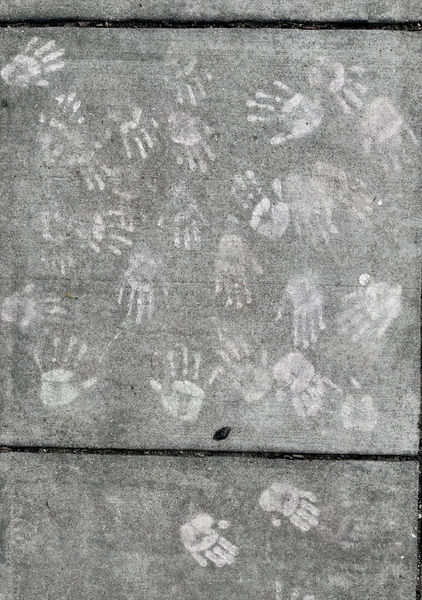
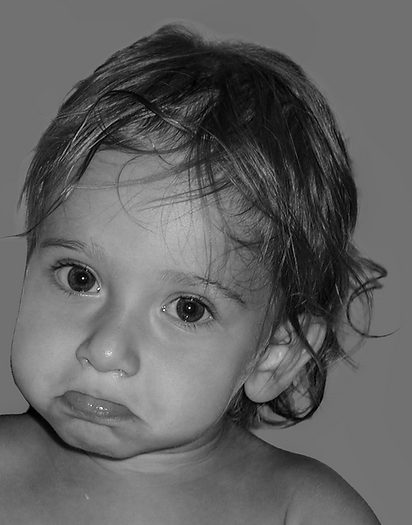
Communication and understanding clearly exist beyond spoken and written language. Babies communicate with their mothers before they speak. Pets express themselves to humans. There are subtleties in facial expression, gesture, or “look” that allow people to convey what is inside to the outside, without using words. Even among adults, much of what is understood passes without words. A look, a pause, a change in breath, or the way a body occupies space can convey meaning more directly than language ever could. These forms of communication rely on presence, attention, and shared context rather than definition. These forms of understanding do not depend on definition, but on relation and proximity, the same conditions that collage later formalizes on the page.









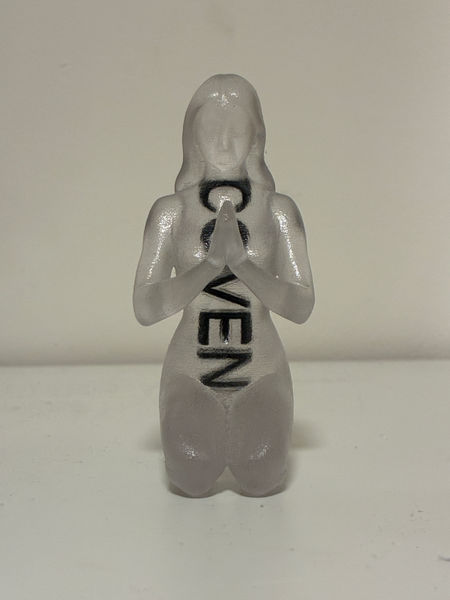


Ritual speech further expands the importance of context, creativity, and community. Wade T. Wheelock highlights that ritual speech does not aim for clarity or information transfer; it presupposes prior initiation into its meaning. “Ritual language… assumes detailed prior knowledge” and is “meant for the responsible participation of initiates” (Wheelock, p. 56). Rather than respond to the previous speaker in open-ended dialogue, ritual discourse follows a predetermined sequence. It is “orchestrated,” in Wheelock’s terms, rather than “responsive” (p. 57). Languages like Latin, Hebrew, Sanskrit, Pali, and Arabic operate at a ceremonial remove from vernacular speech. The purpose of language, in these instances, is not to convey or describe a truth external, but to enact, envision, and create meaning.Consider the Mi Shebeirach, the Jewish prayer for healing, recited or sung within communal worship. In one English rendering it reads: “
For example, the English lyric for the Mi Shebeirach, the Prayer for Healing, Sings “May the source of strength, Who blessed the ones before us, Help us find the courage to make our lives a blessing, and let us say, Amen.” The prayer asks a question to a presumed listener. It does not attempt to verify a fact. Its repeated “May” shapes desire into invocation, orienting speaker and congregation toward restoration.
The phrase “let us say, Amen” gathers the community into action; it does not predict assent but calls it forth into union. In speaking, the assembly performs what the words require, and the utterance becomes the very act it names.Tambiah’s adaptation of Austin clarifies the linguistic logic underlying prayers, blessings, and invocations such as the Mi Shebeirach. Unlike a locutionary act, which produces a statement that can be evaluated as true or false, ritual speech operates as an illocutionary act, “an utterance which has a certain conventional force, a performative act which does something” (Tambiah 466). Its success is therefore measured not by factual correspondence but by whether it is carried out under the conditions that grant it recognition, whether it is judged appropriate, effective, or powerful within the community that performs it. The petitions of the Mi Shebeirach belong to this category, since their force does not depend on verification but on participation, on being spoken collectively within a framework that binds speaker and listener across vulnerability and hope. When Tambiah writes that “in ritual, language appears to be used in ways that violate the communication function” (1968:179), he reframes what communication itself might mean, because the prayer does not simply convey information about healing but gathers those present into a shared orientation toward restoration.
Relation means community as well as analogy. Often in ritual speech, similarity, difference, and proximity are exploited for their creative purposes. Austin’s framework, as Tambiah emphasizes, already moves beyond speech alone, since the utterance is “not the sole thing necessary if the illocutionary act was to be deemed to have been performed,” and actions, gestures, or material operations are often required for the performance to reach completion (Tambiah 2017, 467). Ritual therefore tends to operate through multiple coordinated media at once. Tambiah describes it as “a close interweaving of speech … and action (consisting of the manipulation of objects)” (467–468), meaning that words direct attention and authorize movement while objects and gestures stabilize the transformation being enacted. Meaning emerges through this alignment across voice, body, and material form rather than through verbal content alone. The act is distributed across participants and matter instead of residing within language itself.
Collage is often spoken about as a way of holding difference together, a practice that allows many parts to exist without being resolved into a single whole. It gestures toward a way of thinking that accepts incompleteness as a condition rather than a problem. The dictionary defines collage as “a piece of art made by sticking various materials, such as photographs and pieces of paper or fabric, onto a backing.” It’s second meaning is defined as “a combination or collection of various things.” If everything in life could fall under that second definition, what, then, is not a collage? A self forms through collage. A memory, likewise, is a collage. Even the world itself arrives unevenly, in partial impressions rather than continuous explanation, and coherence is something we assemble afterward. If collage names the act of gathering disparate parts onto a shared surface, then it begins to describe not only an art form, but a basic condition of how meaning takes shape.
Once language is understood within this expanded frame, as something capable of operating through arrangement, handling, and participation rather than through description alone, the boundary between spoken ritual and written form begins to loosen. A structure that organizes fragments, directs movement, and requires physical engagement may also function performatively even when it appears as a book rather than a ceremony.
Within this framework, a written work can also operate performatively if its structure organizes fragments, directs movement, and requires participation from the reader.
Collage Philosophy: A New Philosophy…
If language can wound, conceal, reveal, and remake the world, then the question becomes how to move forward. Plato sought truth in forms that stood beyond emotion and contingency, while Richard Rorty described truth as something made rather than found through acts of redescription. Collage philosophy asks what may be created in the space between these views, where fragments, feelings, and imagination begin to participate in the Collage philosophy reflects a broader philosophical orientation toward language and knowledge. Fragments retain their partiality, yet when they are assembled and grouped together they generate structures through which meaning can take shape. Understanding arises from the relations produced by their arrangement.